Saturday, April 10, 2010

Fossils from the 'Missing Years' in Africa

Researchers say they have identified animal fossils from 27 000 000 years ago in what is now Ethiopia. The remains are from the middle of a time called the "missing years" or the "dark period." This is because scientists have so little information about the mammals that lived then. The period began 32 000 000 years ago. Africa and Arabia were a single continent, a huge island known as Afro-Arabia. The period ended 24 000 000 years ago, after a land bridge formed with Eurasia.

John Kappelman is an anthropologist at the University of Texas in Austin and leader of the American and Ethiopian search team. Mr Kappelman says 8 000 000 years is a long time to lack information about a continent. He says scientists have only been able to guess what happened to African mammals during that period. The remains found in the Chilga area of Ethiopia offer important evidence.

The remains include teeth, skull pieces and other bones. The scientists found them in a farming area about 2000 meters above sea level, in the highlands of Ethiopia. Satellite pictures helped the researchers decide where to dig. The fossils came from about 70 different digs. The magazine Nature published the findings. The scientists say the fossils come from before large numbers of animals began to arrive in Africa from Europe and Asia. The fossils also show that some animals existed millions of years before scientists had thought.

The researchers found several kinds of ancient proboscideans. These are animals with trunks. Modern elephants are proboscideans. Scientists have long thought elephants began in Africa. They say this discovery proves that theory. The ancestors weighed about 1000 kilograms, a lot smaller than African elephants today.

John Kappelman says the elephant ancestors were one of the few African mammals that survived the invasion of mammals from Eurasia. He says elephants got their start in Africa during the eight-million-year period, and then spread around the world. The researchers also found the remains of an ancient animal with two horns on its head, called the arsinoithere. The scientists were excited, because this is the youngest set of such remains yet discovered. The animal is much larger than its ancestors. Earlier forms were about the size of pigs. But the arsinoithere found at Chilga was about two meters tall and weighed more than two tons.

They were similar to the modern rhinoceros. The two are not related. In fact, scientists thought arsinoitheres had disappeared from the Afro-Arabian continent once rhinos arrived from Eurasia. One researcher says it now appears they did not compete for survival. Scientists say they expect more discoveries to come about the mammals that lived during the so-called missing years.

Thursday, April 8, 2010

Independence day of Alabania


On 28 november 1912, when Serbia, MOntenegro and Greece laid claim to Albania lands during the war.the Albanians declared independence.
Since then, Albanians celebrate the birthday of their country every year. Many people go to the center of Tirana and with flags in theri hands sing patriotic songs.
Also, in Vlora, where Ismail Qemali raised the flag for the first time, people organize concerts and parades.

Thursday, April 1, 2010

Alexander Moissi

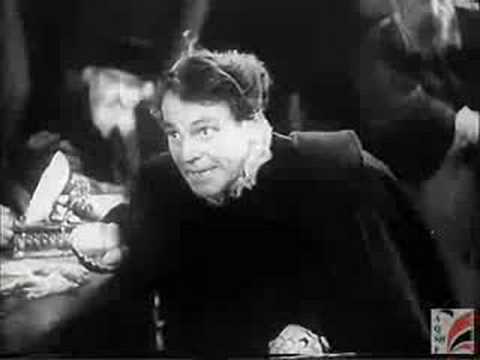
Alexander Moissi, an Albanian famous actor, was born on April, 1879, in Durres. He started his career when he was 19-years old. He went in Viena with the encouragement and support of Austrian actor Josef Kainz. Then he went in Prague and Germany where he became a protégé of the influential director Max Reinhardt. Alexander Moissi became famous with roles of Hamlet, Fedya in Tolstoy's Burried Alive, etc.

Moissi preformed 1400 times befor more than one million people.
He died on March 22, 1935 in Viena. In his Honour, The High college of Drama in Tirana and the Professional Theatre of Durres are called "Alexander Moissi".

Moissi.jpg image by NewKosova

Wednesday, March 17, 2010

IN RESTAURANT

Waiter: Hello!
How can I help you?
Man: We phoned you.there are two of us and the name is Jones.
Waiter: Ok! Please, go and sit over there by the window.
. . .

Waiter: Haven't you desided yet?
Man: No, we aren't ready. But get us some drinks please.
Waiter: What sort?
Man: Two gin and tonics.
Waiter: Ok, immediatly.
. . .

Woman: Come here, please.
Waiter: Are you ready to order?
Woman: Yes, give me the tomato sald and then the lamb.

Waiter: Ok, and you sir?
Man: I just want the grilled salmon steak.
Waiter: What do you want with it?

Man: A side salad. Oh, and get us some house red wine and mineral water.
Waiter: All right.
. . .

Waiter: Do you want a dessert now?
Woman: Yes, please. For me a chocolate cake.
Waiter: And you?
Man: Just a coffee.
Waiter: Do you prefer black or white?
Man: Eee..., black. And please bring me the bill.
Waiter: Ok.

The old flea market of Kruja

The old flea market of Kruja

The old flea market of Kruja is very special, offers many souvenirs and traditional handmaked, like to make the carpets, clothing and special hats.
Now there are about 30 stores, which have almost the same structure construction, uniform height, old tiled roof. Traded old traditional clothing of women and men from different regions of the country.
Also we can find Antiques and crafts created.
This market is very important for locals as well as for tourism development in Albania. Many of them visit every year Kruja, which monitors the country's traditional culture.


Tuesday, March 9, 2010

WORLD'S MIRACLES

1.Petra, Jordan

The ancient city of Petra in southern Jordan was the capital of the Nabataean kingdom and an important trading center from late 400 bc to early ad 200. The Nabataeans, an Arab people, carved the city into rock 2,000 years ago. Shown here is the monastery.

2.Easter Island, Chile

Gigantic statues and other archaeological remains of ancient Polynesian peoples are found on Easter Island, which lies west of the Chilean coast and is considered part of Chile.


3.Temple of the Sun, Teotihuacán

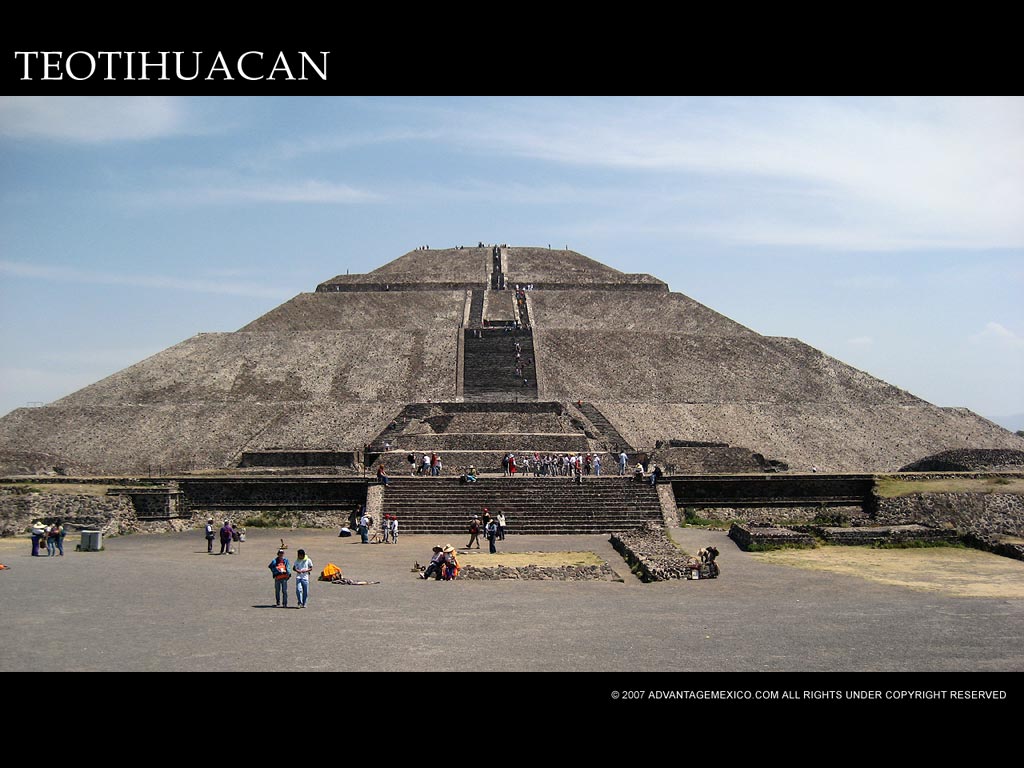
The Temple of the Sun at Teotihuacán, Mexico, was built between ad 50 and 200. The pyramidal structure is made of layers of clay faced with stone, and it stands about 61m (200 ft) high. Flights of stairs lead to the top, where a temple to the sun god Uitzilopochtli originally stood. The site is aligned with the rising and setting of the sun on the summer solstice.


4.

Palenque

This palace near the village of Palenque, Mexico, dates from the classic period of the Maya civilization, from about ad 300 to 900. The entire structure rests on a truncated pyramid.


5.

Machu Picchu, Peru

The ruins of Machu Picchu, near Cuzco, are the remains of an ancient city of the Inca Empire. The civilization, based in southern Peru, dates to 1200. The Inca mastered architecture, road building, and astronomy and were noted for their code of laws and advanced system of government.


6.

Colosseum

Rome Colosseum

The Colosseum in Rome (70-82) is best known for its multilevel system of vaults made of concrete. It is called the Colosseum for a colossal statue of Nero that once stood nearby, but its real name is the Flavian Amphitheater. It was used for staged battles between lions and Christians, among other spectacles, and is one of the most famous pieces of architecture in the world.


7.

Great Wall of China

The Great Wall of China

Sections of the Great Wall of China, including this section near Beijing, have been restored in the 20th century. Built by the Ming dynasty in the 15th and 16th centuries, the Great Wall stretches about 2400 km (about 1500 mi) along China’s northern border. Shihuangdi, the first emperor of China (221-210 bc), constructed different fortifications also known as the Great Wall. Few traces remain of that ancient structure.

In the 15th and 16th centuries the Ming dynasty built elaborate earth-and-stone fortifications along China’s northern border. Although the Great Wall followed the contours of the land, it actually provided poor defense against Mongol challengers, who were able to pass around or break through the walls during raids.


8.

Sydney Opera House, Australia

The shell-shaped Sydney Opera House is one of the most famous pieces of modern architecture in the world. It was designed by Jørn Utzon and completed in 1973. Sydney is the capital of New South Wales, which is located on the southeastern coast of Australia. Sydney is the largest city in Australia and the country’s cultural center.


9.

Statue of Liberty

The Statue of Liberty, a symbol of freedom for many, was one of the first sights to welcome immigrants arriving in the United States. The statue stands 93 m (306 ft) tall on Liberty Island in New York Harbor. It was designed by French sculptor Frédéric-Auguste Bartholdi and is a gift from France commemmorating the first centennial of U.S. independence from Britain.